
Content » Edit Post Settings
Link: https://support.brilliantdirectories.com/support/solutions/articles/12000053202
The Edit Post Settings folder is where post types can be edited, deleted, and cloned.
There are 13 default post types included with the website:
- Community Article
- Website Blog Article
- Video
- Property
- Product
- Photo Album
- Job Listing
- Event
- Coupon
- Classified
- Soundcloud
- Member Listings
- Discussions
The main Edit Post Settings page features four clickable elements in each post type's row:
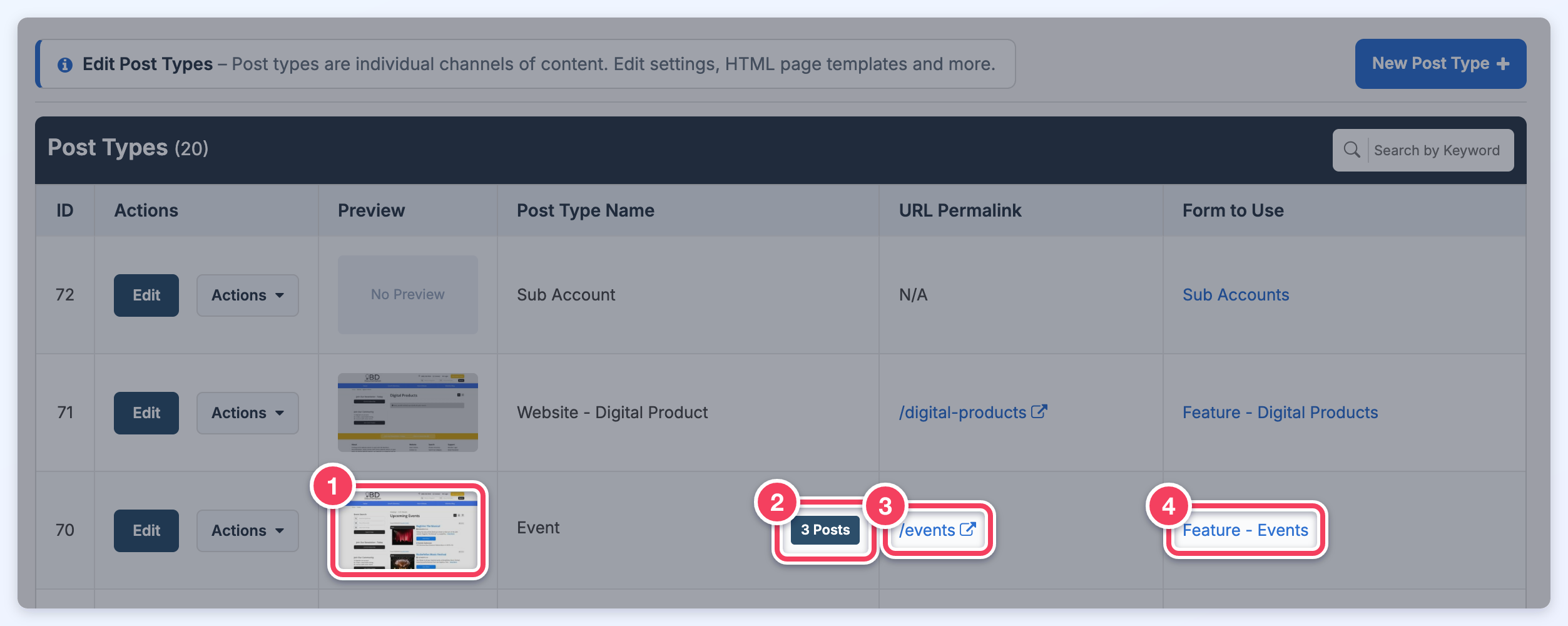
1. Preview: Redirects to the post search results page.
2. Number of created posts: Redirects to the Manage Posts section for the specific post type. Refer to this article for more information: Content » Manage Posts
3. URL Permalink: Redirects to the post search results page.
4. Form to Use: Opens the specific form associated with the post type for editing. To learn more about the Form Manager, click the following article: Toolbox » Form Manager
Upon clicking "Edit" for a post type, four tabs are available with distinct settings: General Settings, Profile Page Design, Search Results Design, and Detail Page Design.
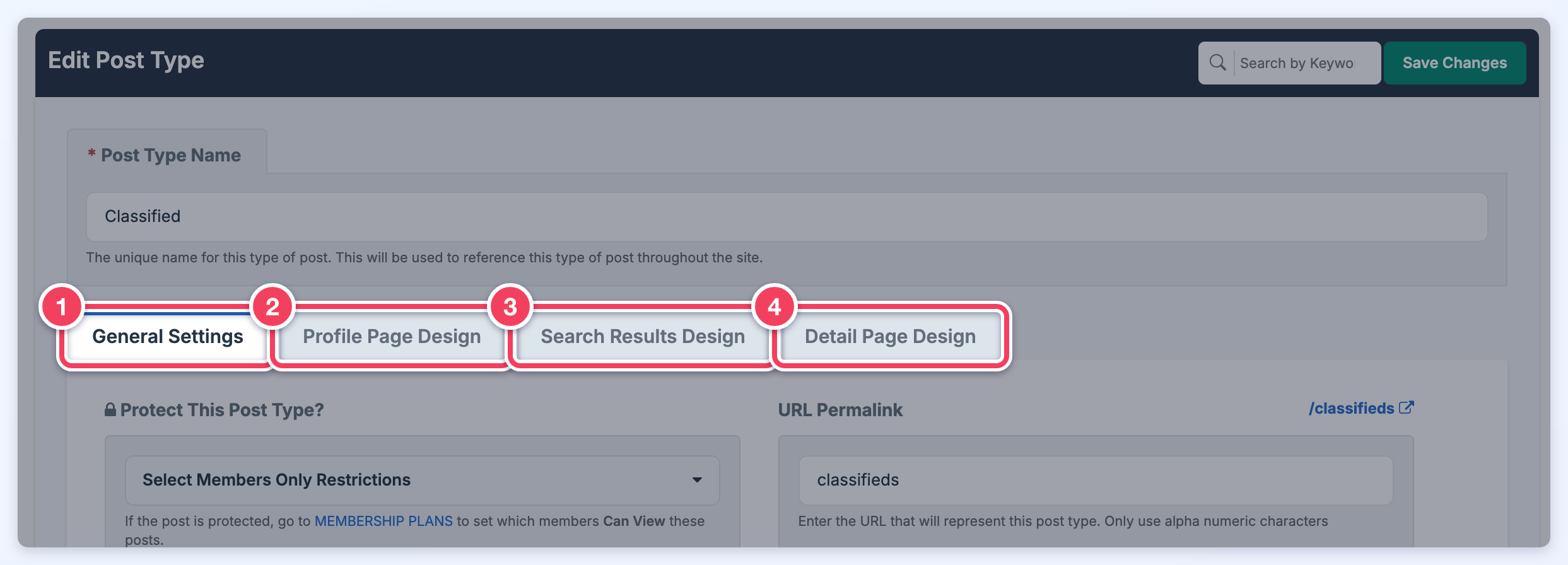
General Settings Tab
The general settings for the post type are as follows:
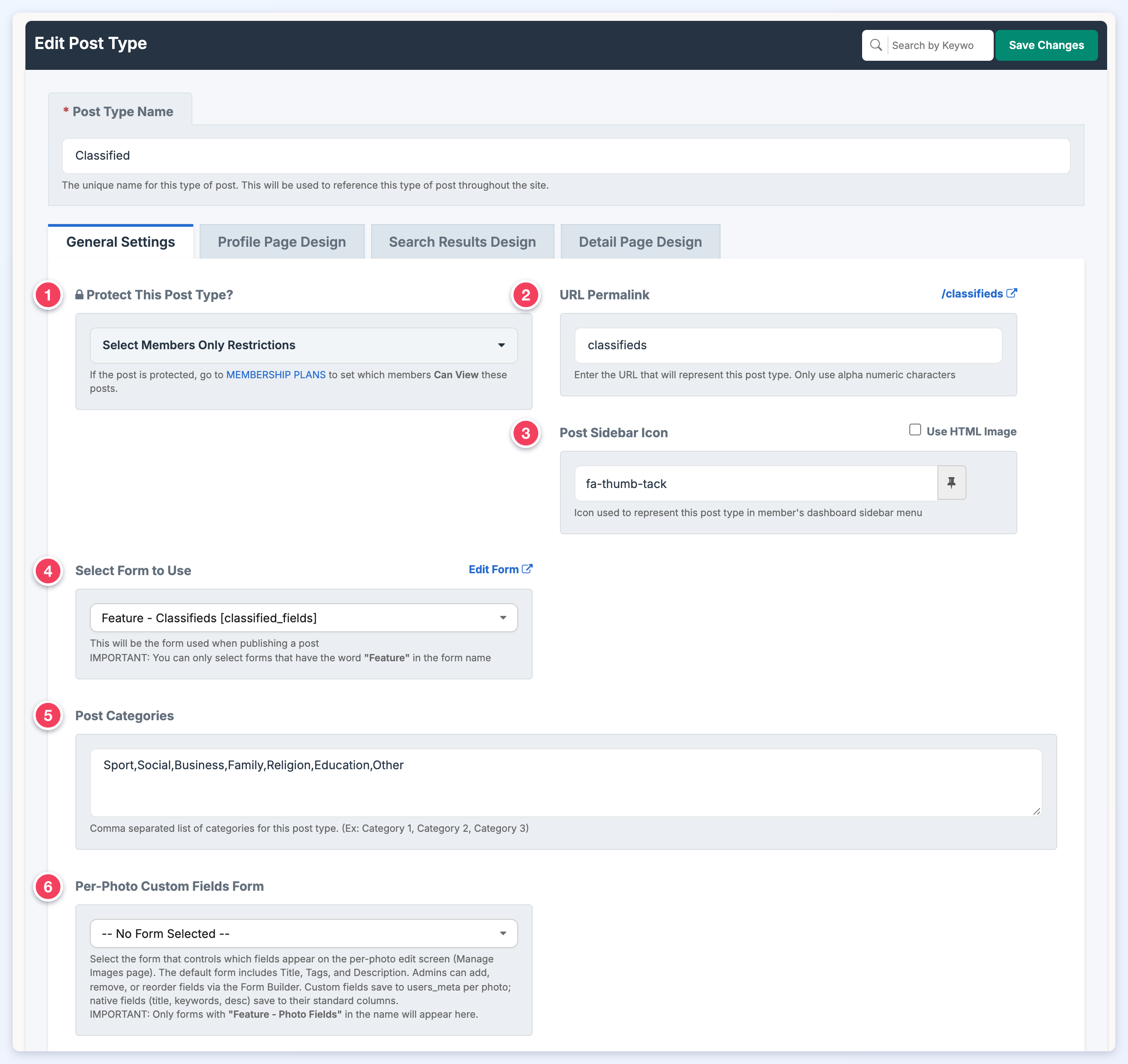
1. Protect this Post Type?
This option is only available if the Members-Only Content add-on is active on the site.
2. URL Permalink
Updates the URL of the post type search results. Refer to this article for details on How To Change The Name, Tab Title & URL Of A Post Type.
3. Post Sidebar Icon
Selects the icon used to represent this post type in the member dashboard sidebar menu.
4. Select Form to Use
Determines the form members fill in when they add or edit a post of this type. Click Edit Form to open the selected form in the Form Manager.
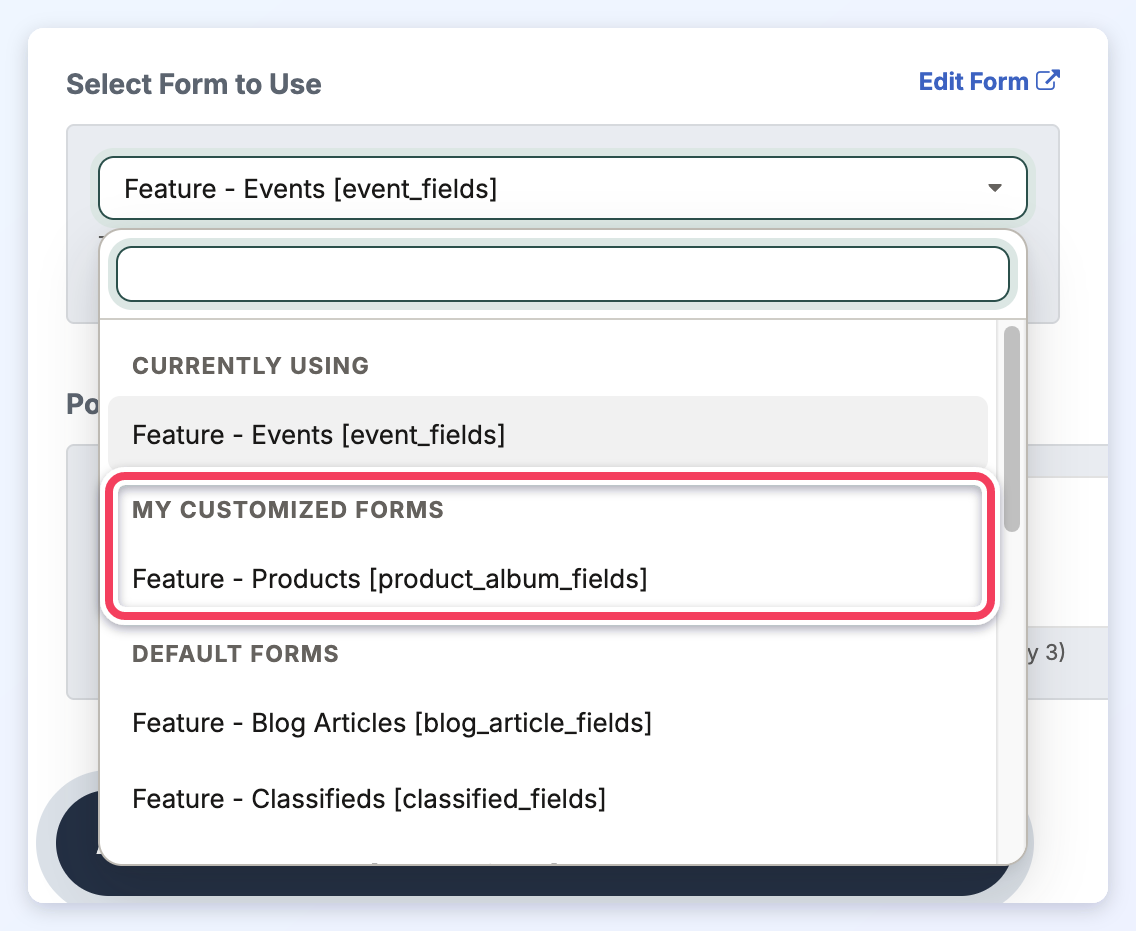
The list only offers forms that members fill in, which are forms with the word "Feature" in their name. Admin forms, such as the form used to edit post type settings, are never listed. The forms are grouped as follows:
- Currently Using: the form the post type uses now.
- My Customized Forms: the site's own customized copies of these forms. When a customized form keeps the name of a default form, select it here; the default form it replaces is not listed again under Default Forms.
- Default Forms: the default forms included with the website.
A Sub Account post type also lists the Sub Accounts form, which does not have "Feature" in its name.
A post type that members post to must have a member form selected. If none is selected, for example a post type that was previously saved with an admin form, the list shows an empty current form:
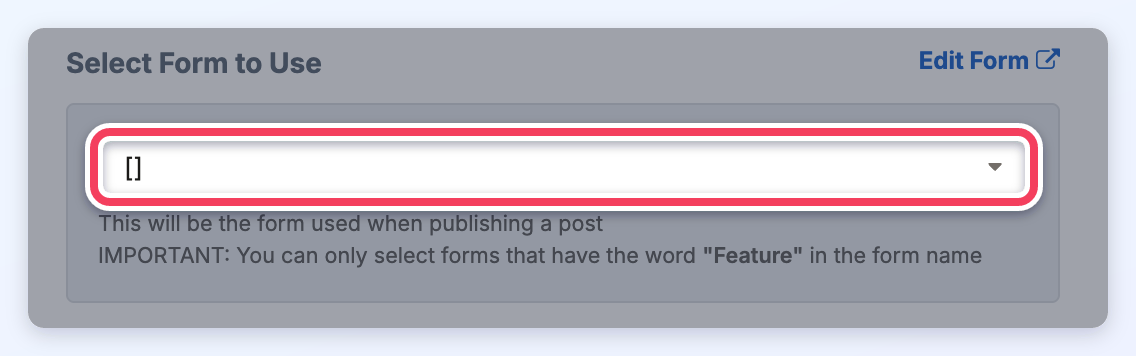
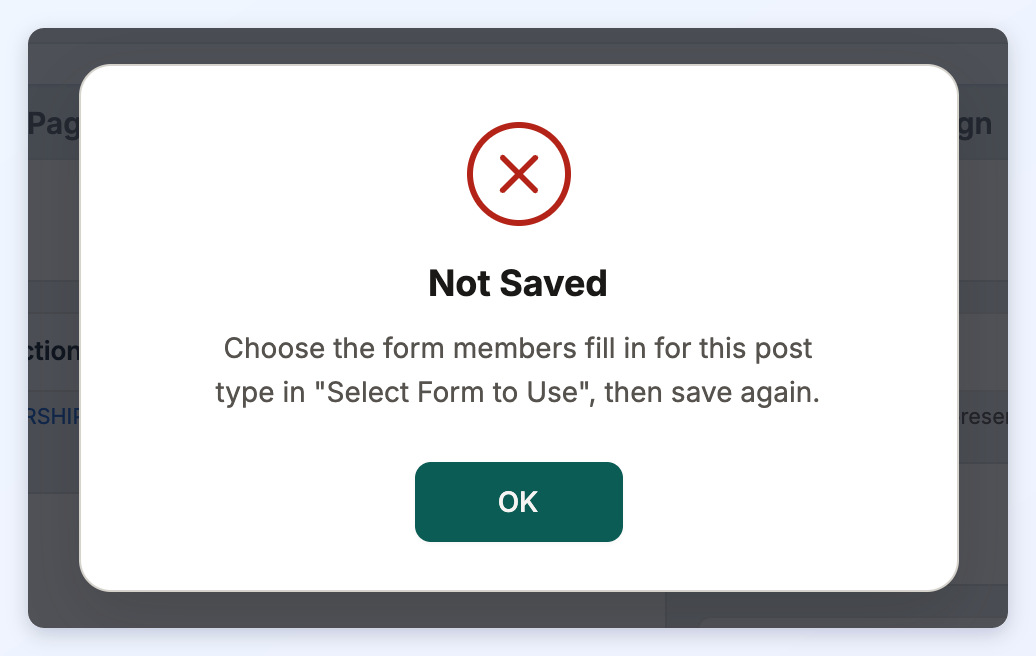
Clicking Save Changes then shows a Not Saved message asking to choose the form members fill in for this post type, and nothing is saved until a form is selected in this list. The same check applies when creating a new post type, and a post type without a member form cannot be cloned until a form is selected for it.
5. Post Categories
Certain post types, such as properties, coupons, and events, include pre-set categories. Refer to this article for more details on How To Add or Edit Categories For Post Types.
6. Per-Photo Custom Fields Form
Available on multi-photo post types, such as Classified, Photo Album, Product and Property. Selects the form that controls which fields appear on the per-photo edit screen (Manage Images page). Only forms with "Feature - Photo Fields" in their name are listed. When it is left on -- No Form Selected --, the default per-photo fields (Title, Tags and Description) are used.
7. Additional Settings
Click Additional Settings to expand more options. The settings vary by post type. The following are available for the "Classified" post type:
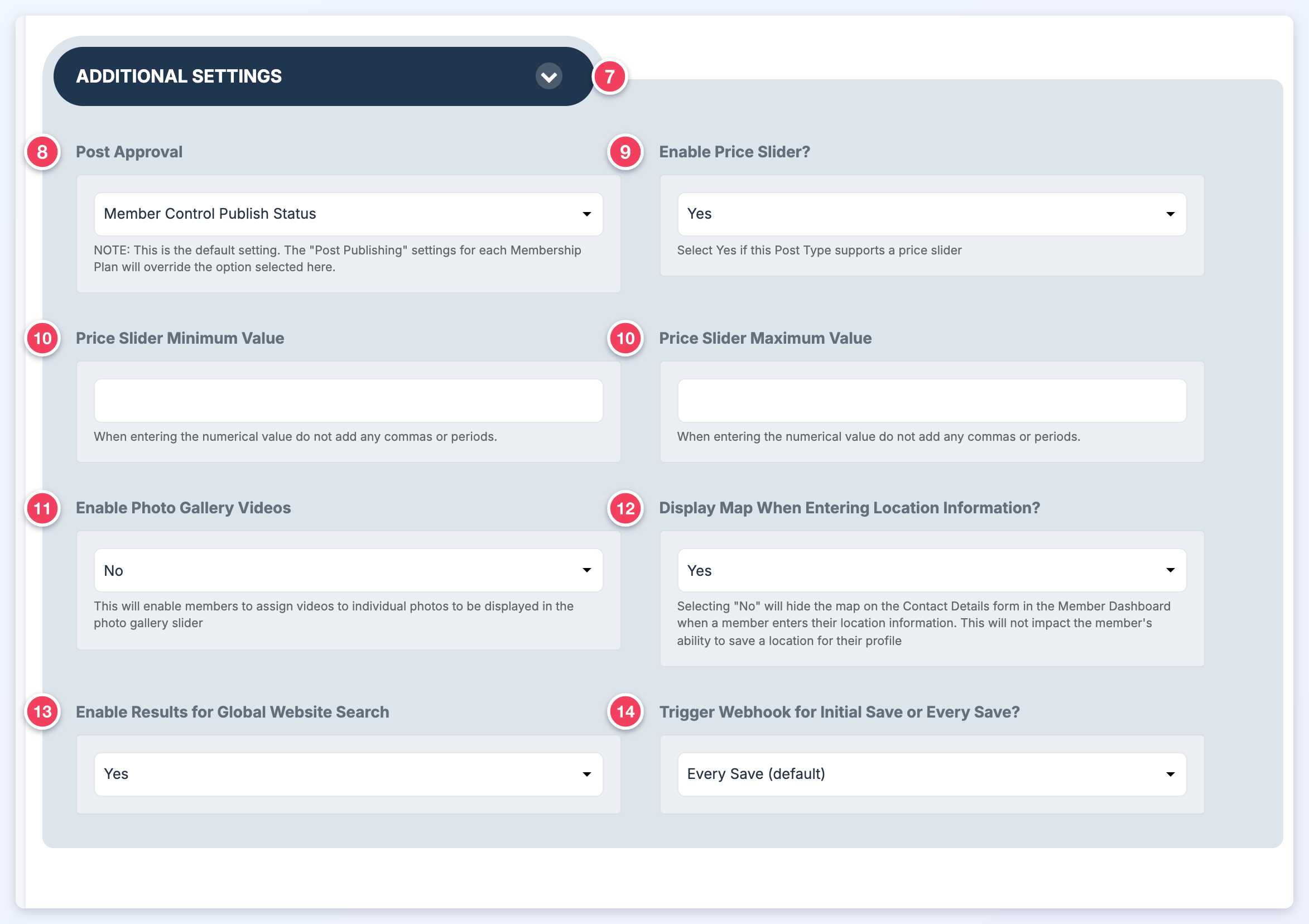
8. Post Approval
Requires the Advanced Post Moderation add-on. Note that "Post Publishing" settings within each Membership Plan will override the selected option.
9. Enable Price Slider?
Activates the price slider for relevant post types.
10. Price Slider Minimum + Maximum Value
Certain post types, such as Classifieds, include sliders in search widgets to allow price range selection. Refer to this link to learn how to Edit The Min & Max Value of Price Sliders.
11. Enable Photo Gallery Videos
Enables video integration for multi-photo albums. Refer to the following article for more information: How to Add Videos to Multi-Photo Post Types.
12. Display Map When Entering Location Information?
This setting controls the display of the map. Helpful information can be found in this article: Google Maps: Reducing Usage and Costs.
13. Enable Results for Global Website Search
Requires the Global Website Search add-on.
14. Trigger Webhook for Initial Save or Every Save?
Determines when a Webhook is triggered upon post creation by a member.
Profile Page Design Tab
Use this tab to configure how posts are displayed on public member profiles.
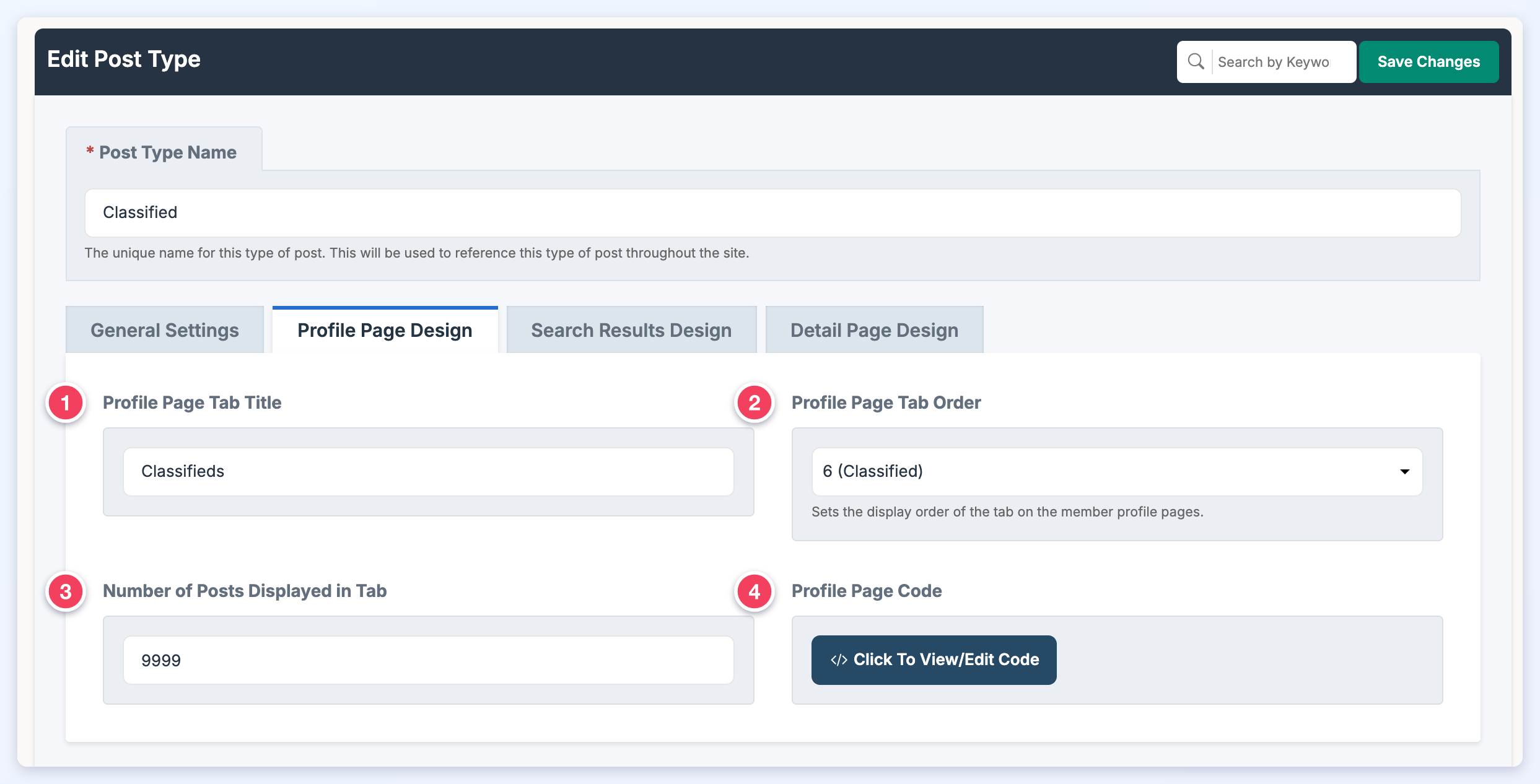
1. Profile Page Tab Title
Modifies the title displayed on the front-end tab.
2. Profile Page Tab Order
Sets the position of the profile page tab via the dropdown menu. Each position displays the name of the assigned post type. Available positions are those with no assigned post type.
3. Number of Posts Displayed in Tab
Sets the quantity of posts to be displayed.
Information is displayed on the live member profile as follows:
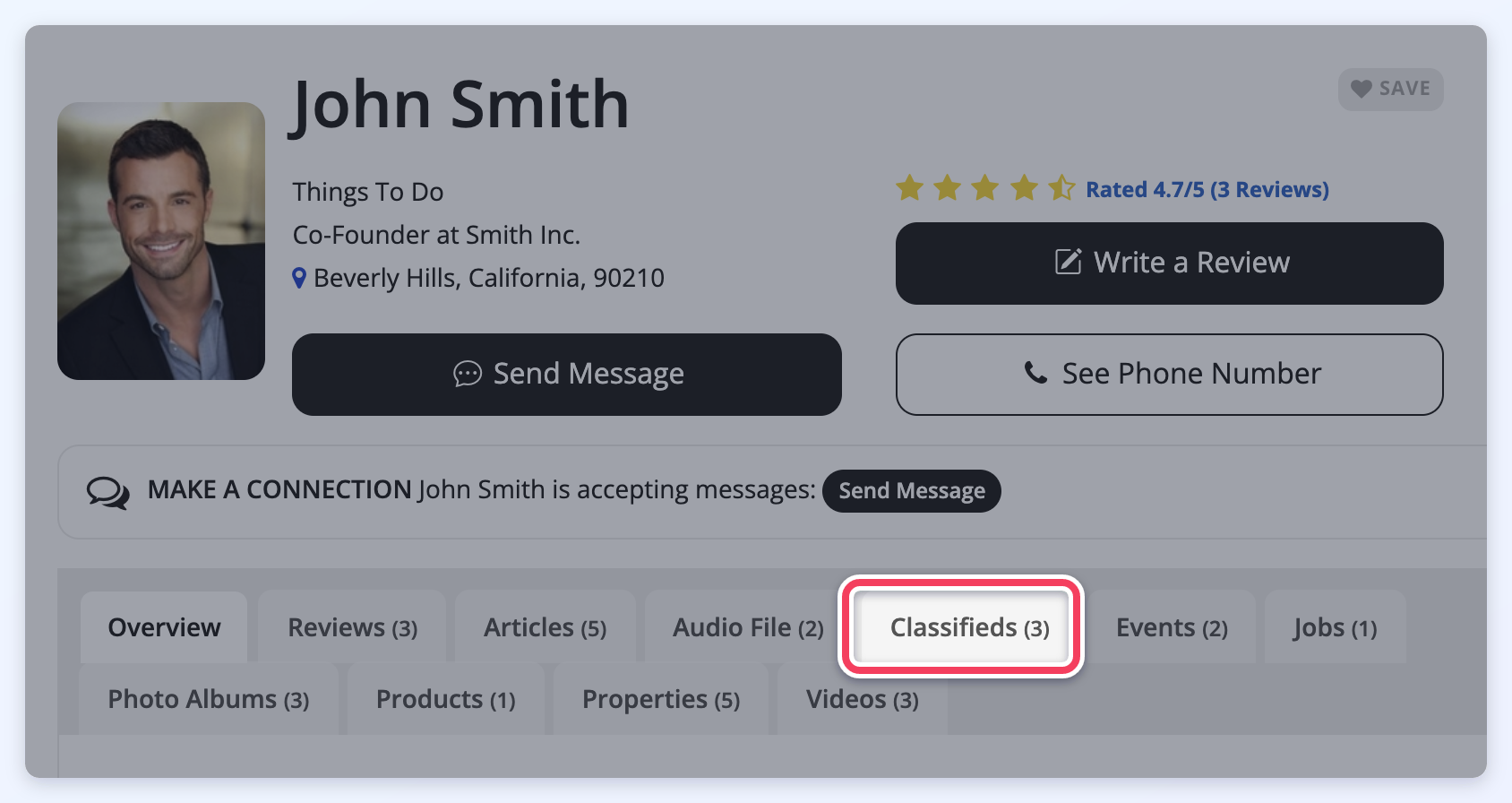
4. Profile Page Code
The header, page loop, and footer codes for the Profile Page design can be modified. However, changes are only recommended for developers or individuals with web development expertise. Codes can be restored to default if necessary. Refer to this article for further information: How to Customize the Default Post Types Code.
Search Results Design Tab
Configure search results settings for a specific post type within this section.
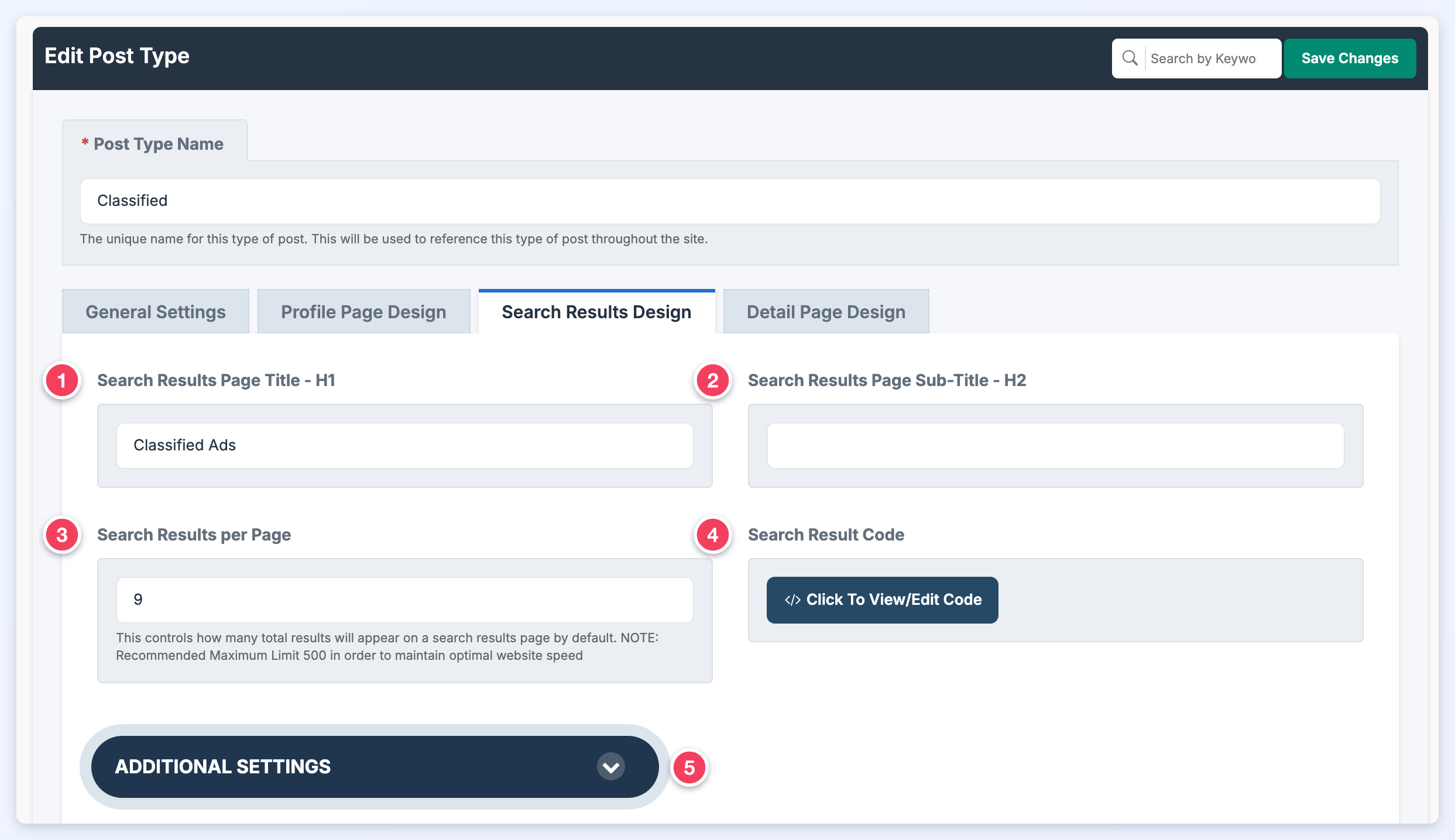
1. Search Results Page Title - H1
Edits the text for the post type title.
2. Search Results Page Sub-Title - H2
Adds an optional subtitle.
3. Search Results per Page
Controls the default number of results appearing on a search results page.
4. Search Result Code
Allows for editing the header, loop, and footer codes of the search results design. Refer to this article for more information: How to Customize the Default Post Types Code.
5. Additional Settings
Click Additional Settings to expand more options for further customization:
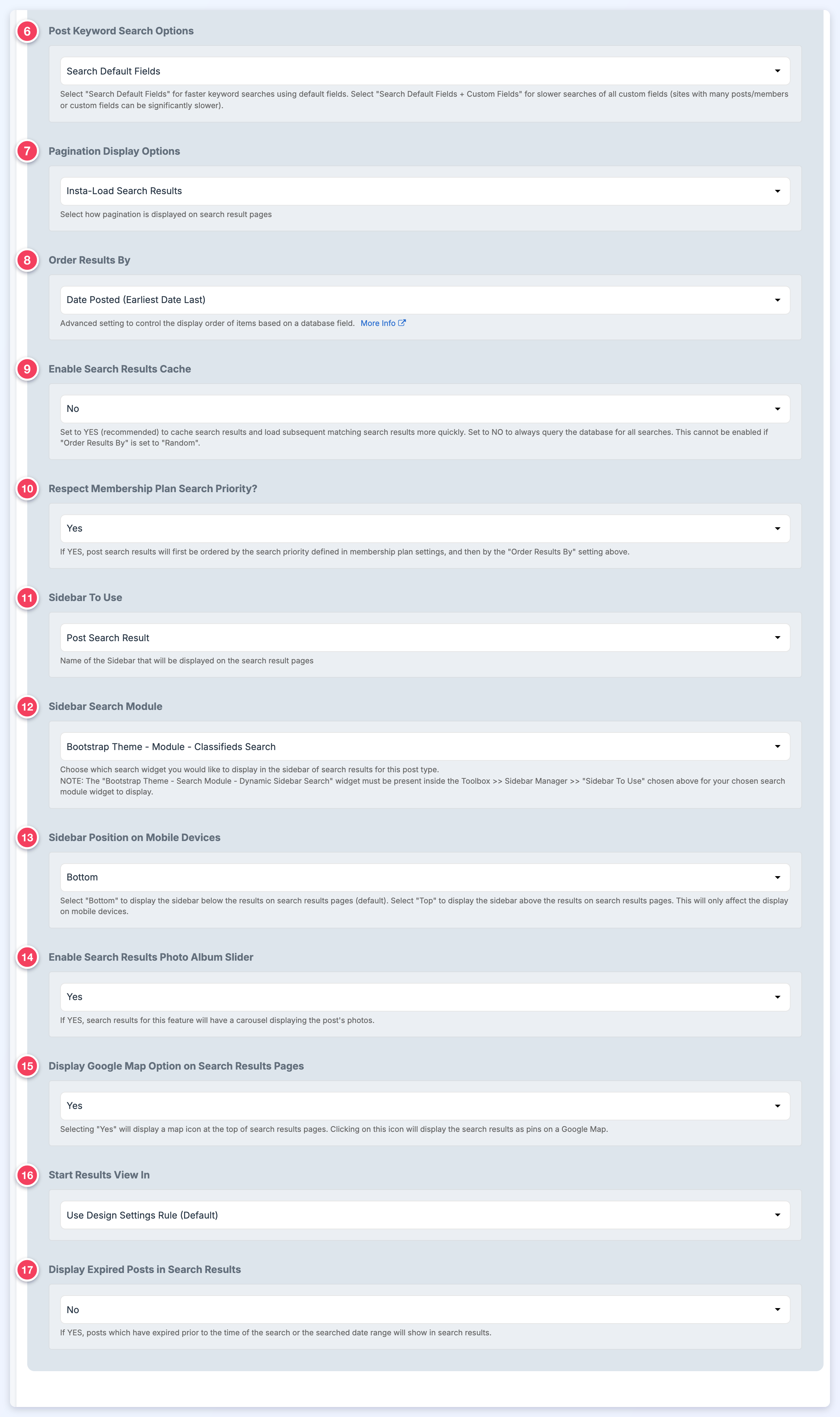
6. Post Keyword Search Options
Advanced settings to control keyword search functionality. The "Search Default Fields" option also includes post description fields. Refer to this article regarding the Expanded Keyword Search add-on.
7. Pagination Display Options
Selects the pagination style for search results: standard, hidden, or Insta-Load pagination (requires add-on).
8. Order Results By
Controls the display order of items based on a specific database field. Further information is available here: How To Change Search Results Sorting Options.
9. Enable Search Results Cache
Setting this to YES (recommended) caches search results to improve load times for subsequent matching searches. Setting this to NO ensures the database is queried for every search.
Note: This cannot be enabled if "Order Results By" is set to "Random."
10. Respect Membership Plan Search Priority?
Membership Plan Search Results Priority is configured within the Search Visibility tab of each plan.
11. Sidebar To Use
Specifies the sidebar (custom or default) to be displayed on search results pages.
12. Sidebar Search Module
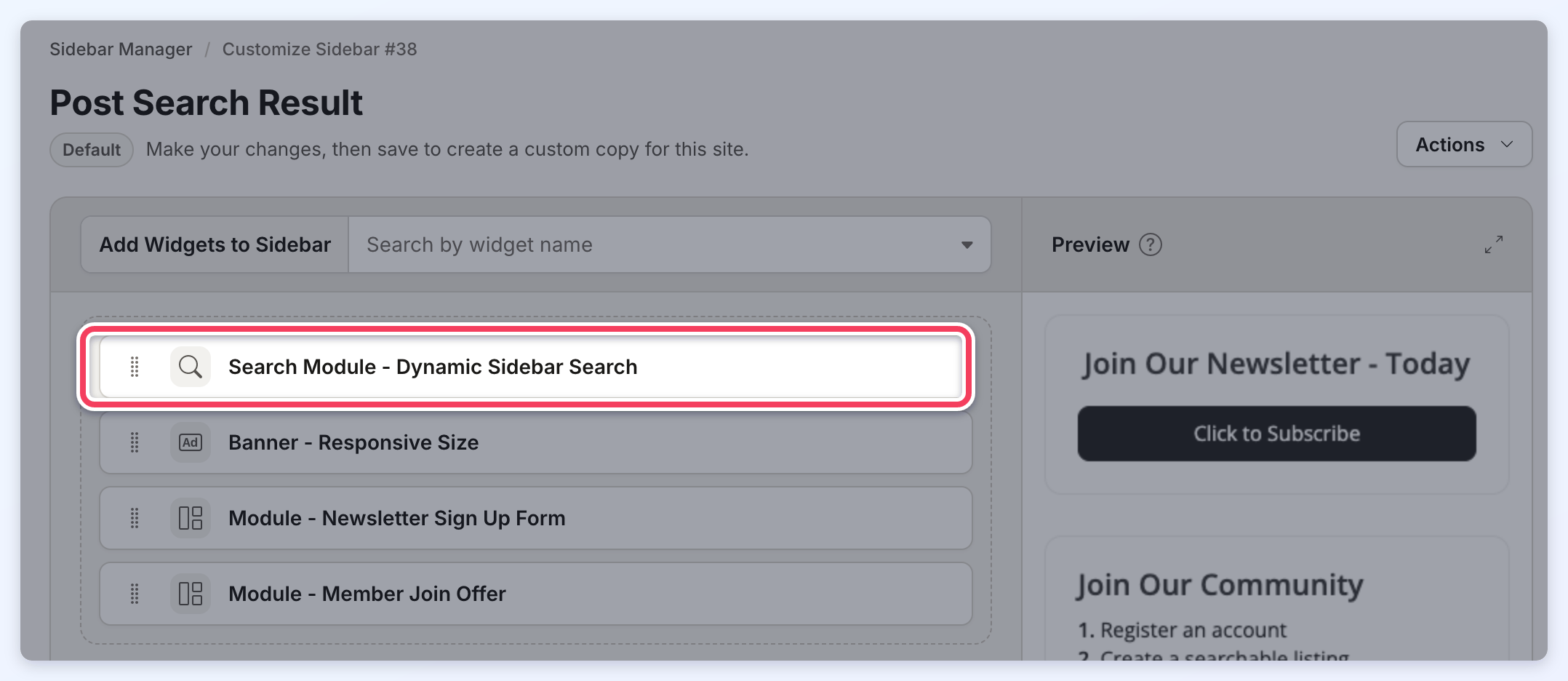
Selects the search widget to display in the search results sidebar. This requires the sidebar chosen in Sidebar To Use to include the Bootstrap Theme - Search Module - Dynamic Sidebar Search widget, which the Sidebar Manager lists as Search Module - Dynamic Sidebar Search. This widget loads the search module specified for each post type.
13. Sidebar Position on Mobile Devices
Determines the sidebar's position on mobile devices (phones and tablets): Bottom (below results), Top (above results), or Hide.
14. Enable Search Results Photo Album Slider
If set to YES, search results for this post type will include a carousel displaying post photos.
15. Display Google Map Option on Search Results Pages
Selecting "Yes" displays a map icon at the top of search results pages. Clicking this icon displays results as pins on a Google Map.
16. Start Results View In
Select list view, map view, or grid view (requires the Grid View Search Results add-on).
17. Display Expired Posts in Search Results
If set to YES, expired posts will be displayed on search results pages.
On some sites, a Custom Search Engine Widget Name setting also appears in this section. It is shown only when the post type already uses a custom search engine widget or the site has this option enabled, and it adds a widget to utilize a custom search engine.
Detail Page Design Tab
This section allows for the configuration of various settings for the post detail page.
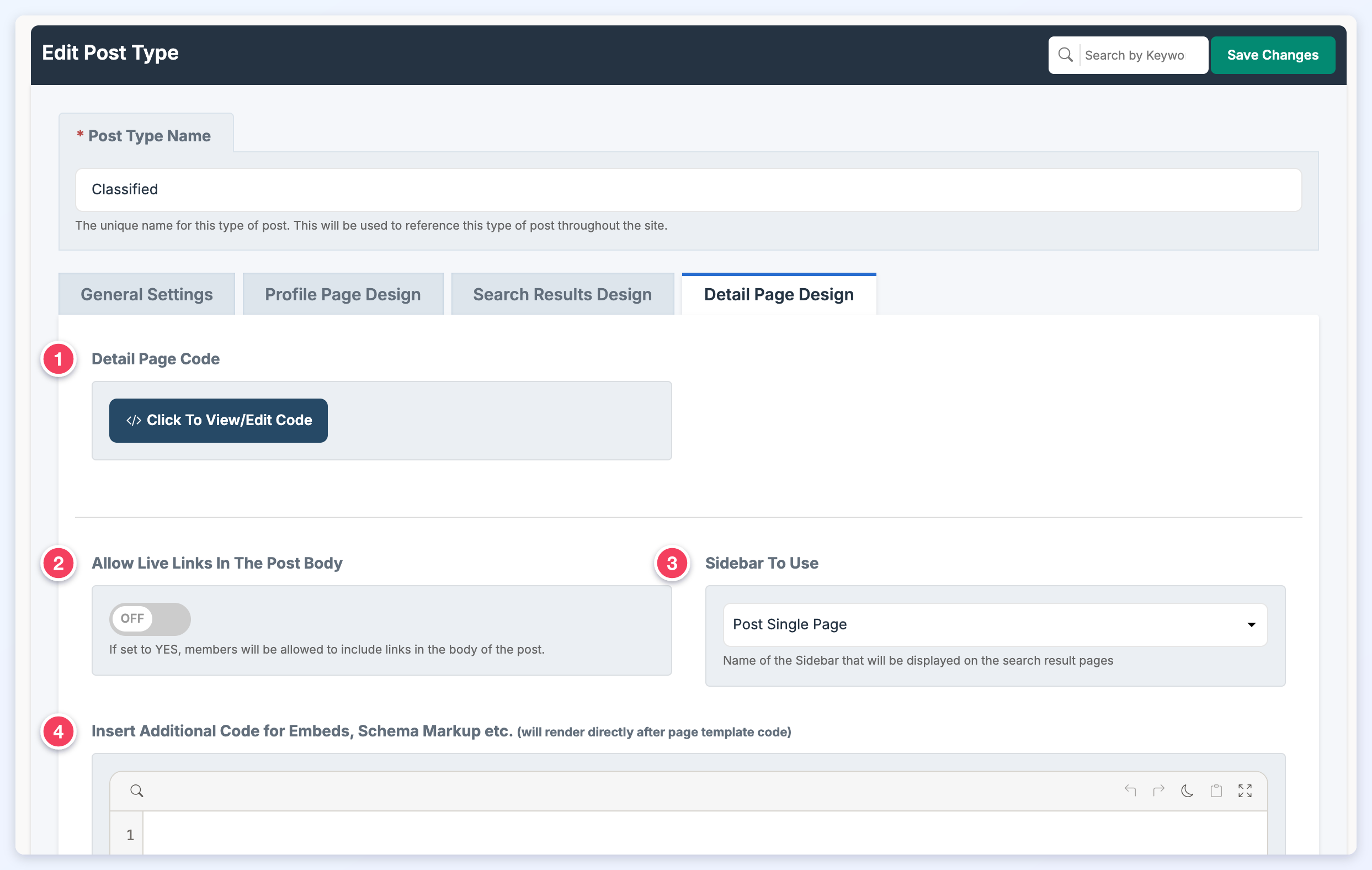
1. Detail Page Code
Additional custom codes can be added to this field. Code modification is not recommended unless a developer is managing the site. Refer to this article for more information: How to Customize the Default Post Types Code.
2. Allow Live Links In The Post Body
If set to ON, members are permitted to include links within the post body. This can be toggled for each post type.
3. Sidebar To Use
Specifies the sidebar to be displayed on the post detail pages.
4. Insert Additional Code for Embeds, Schema Markup etc. (will render directly after page template code)
Any additional code required for the comments section should be pasted here.
Additional Actions
Hover over the Actions button in a post type's row to reveal further actions:
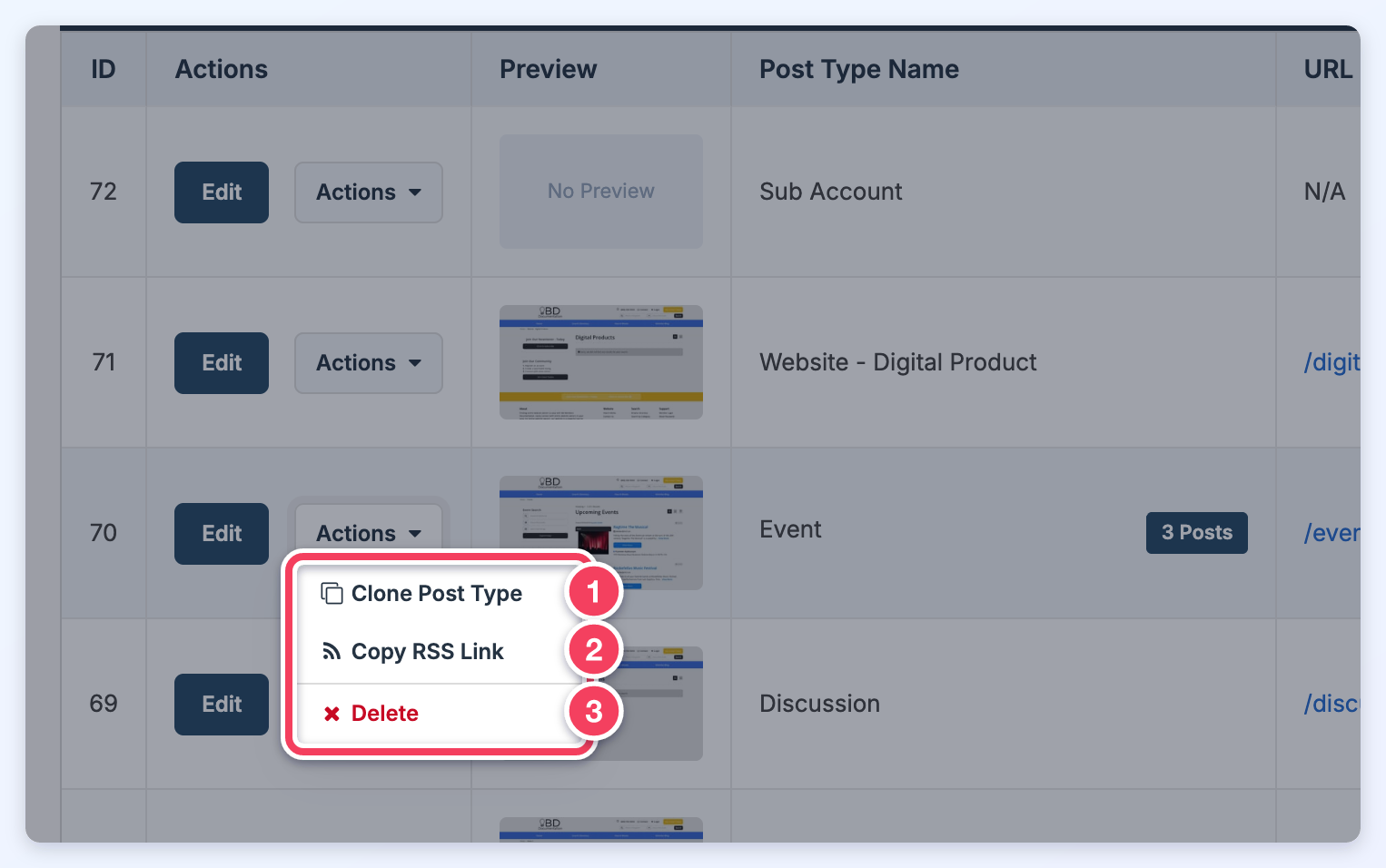
1. Clone
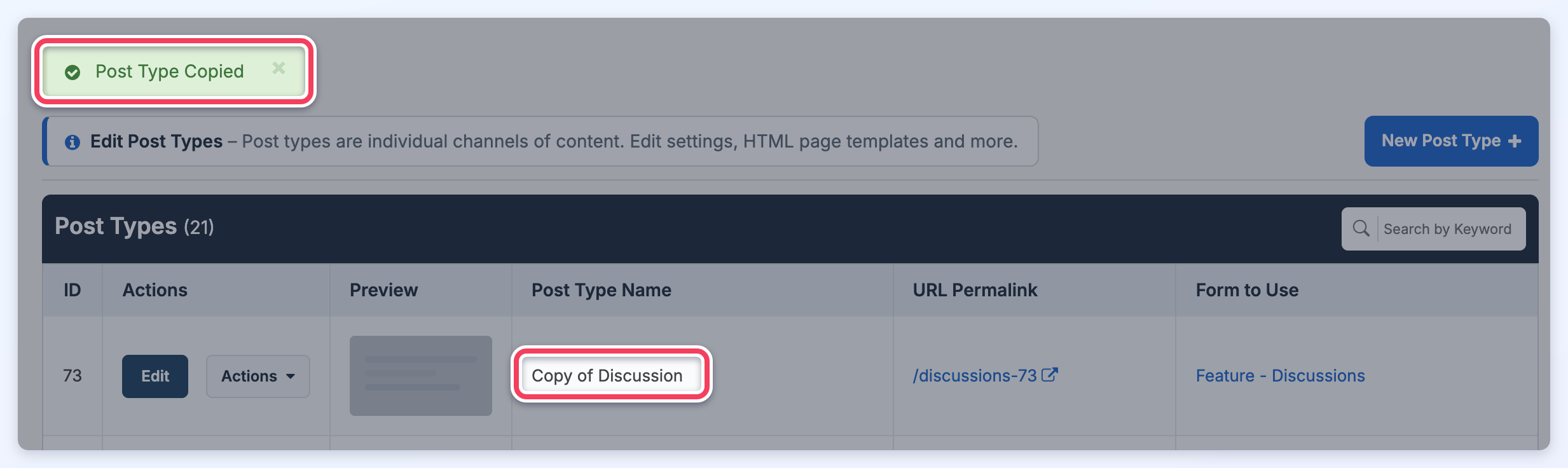
Selecting Clone Post Type creates a duplicate of the post type. In the example below, the Discussion post type has been cloned. A post type that has no member form selected in Select Form to Use cannot be cloned until a form is selected for it.
2. Copy RSS Link
This option is only visible if the RSS Feed for Posts add-on is active.
3. Delete
Prior to deleting a post type that contains existing posts, an option to move those posts to another post type is presented. Leaving it on No, Delete The Posts deletes the posts along with the post type. Selecting Yes shows a list of post types to move the posts to.
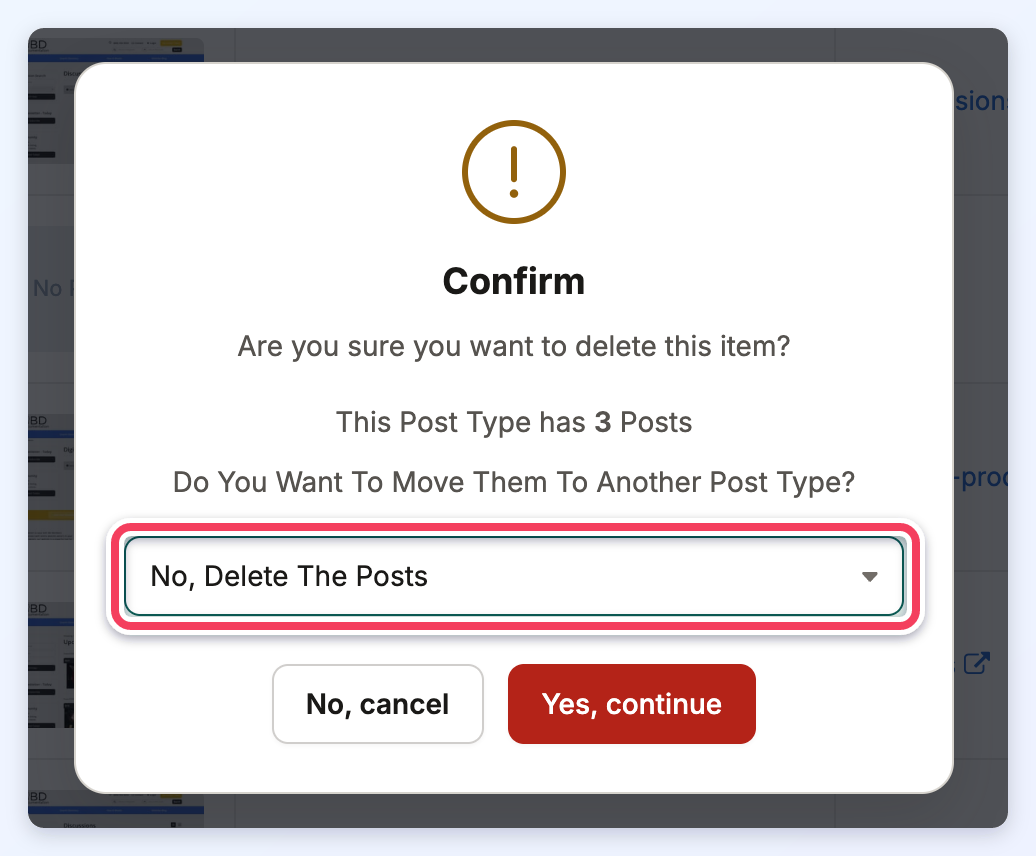
Once the destination post type is selected, all posts will be transferred when Yes, continue is clicked.
